


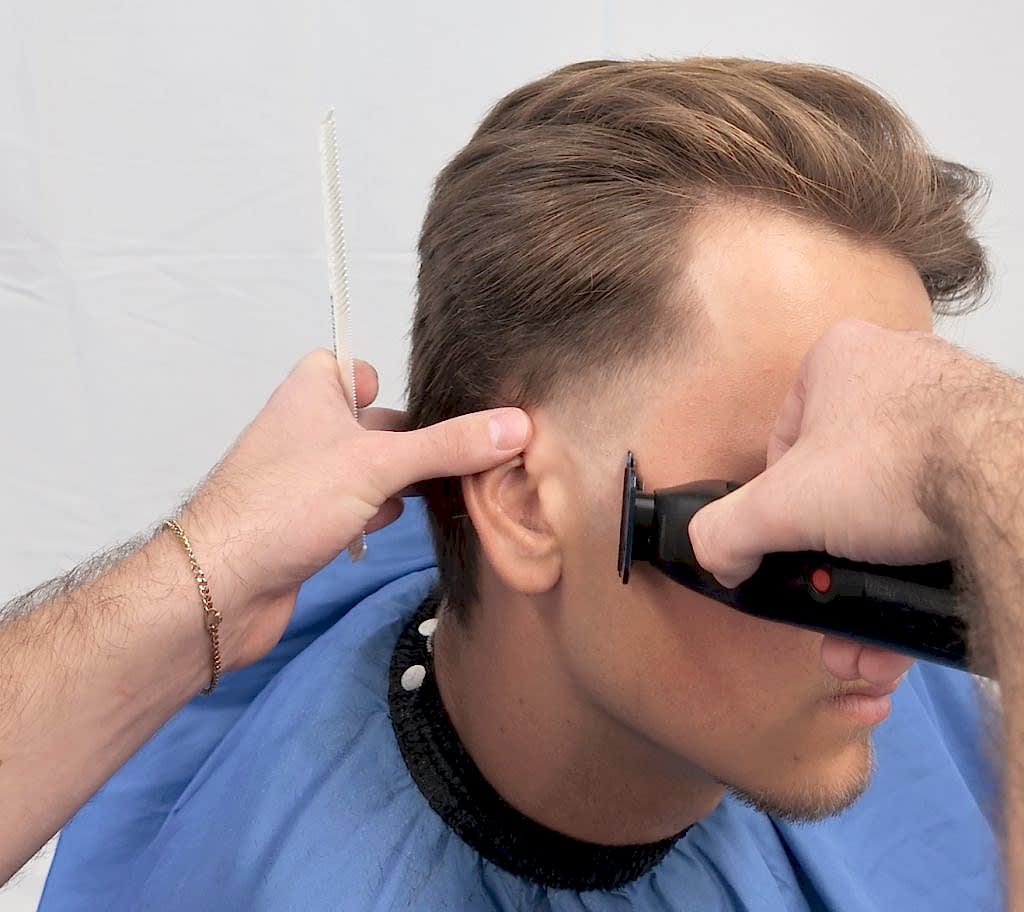
When you’re starting out in barbering, your qualification matters but employers also want to see what you can actually do.
That’s where your barbering portfolio comes in, and these days, that portfolio is just as likely to live on your Instagram grid as it is in a folder of photos.
A strong portfolio gives barbershop owners a clear picture of your technique, versatility and development behind the chair. It shows more than a certificate ever could: how you approach different cuts, how consistent your work is and whether you’re building the practical skills needed to work with real clients. Increasingly, that’s exactly what a shop owner is looking at when they check out a candidate’s Instagram before they’ve even met them.
If you’re researching how to become a barber or wondering what will help you stand out when applying for your first barbering job, building your portfolio, on your phone, on social media, wherever you share your work, should be part of the process from the beginning.
What Is a Barbering Portfolio? Building Your Content on Social Media
A barbering portfolio is a collection of your work that demonstrates your ability as a barber. It could include before-and-after images, finished cuts, different techniques and examples of the variety of clients you’ve worked with, and for most barbers today, that collection is built and shown off on Instagram just as much as anywhere else.
But a good portfolio shouldn’t simply be ten versions of the same skin fade, whether that’s in a printed folder or on your feed. The strongest portfolios show range.
Employers want to see that you understand the fundamentals behind barbering and can adapt your technique depending on the person sitting in your chair. That means demonstrating different lengths, shapes, finishes, hair types and techniques wherever possible, and posting that variety consistently is what turns a casual Instagram page into a genuine portfolio.
What Should You Include in Your Barbering Portfolio?
As you progress through your barber training, look for opportunities to document a broad selection of your work, and to actually post it.
Your portfolio might include fades and clipper work, scissor cuts, longer styles, different hair textures, beard work, before-and-after transformations and more creative cuts. Good lighting, a clean background and a consistent style go a long way toward making that work look as strong online as it is in person.
It’s also worth showing your progression. The haircut you complete during your first few weeks of training may look completely different to the work you produce towards the end of your course. Keeping both, and being willing to show that growth on social media rather than deleting your earlier posts, can demonstrate how your control, confidence and attention to detail have developed.
The aim isn’t to make every image look identical. It’s to show that you can understand the client in front of you and make the right technical decisions for their hair.
Real Client Experience Makes a Difference
There’s a big difference between practising a technique and carrying it out on a real client. Real clients bring different hair growth patterns, head shapes, textures, expectations and requests. You have to communicate, consult, adapt and make decisions as you work.
That experience matters when you start applying for barbering jobs, and it matters just as much when you’re building a following, since real client work is what people actually want to see and engage with online.
At London School of Barbering, students build their skills through hands-on, live-client training, with expert educator guidance throughout. Students can complete approximately 80–100 real client cuts during their training, giving them repeated opportunities to put their skills into practice.
That means your portfolio, wherever you choose to build it, can be based around real work and real experience behind the chair, not staged or practised cuts on a mannequin.
Your Portfolio Should Show More Than a Good Fade
Fades are an important part of modern barbering, but employers need barbers who can handle more than one style, and a feed full of only fades won’t stand out any more than a folder full of them would.
A strong barbering portfolio should demonstrate your ability to understand shape, work with different hair types, use both clippers and scissors and adapt the haircut to the client.
The more versatile your work becomes, the more prepared you’ll be for the variety of clients that walk through the door of a busy barbershop, and the more likely your page is to catch the eye of someone scrolling through candidates.
Your portfolio, on your phone or in person, is the perfect place to demonstrate that range.
What Do Barbershop Employers Look For?
Technical ability is important, but getting hired isn’t only about producing a good, finished haircut.
Employers also need to know that you can work professionally with clients. That includes carrying out a consultation, listening to what the client wants, understanding hair growth and head shape, communicating clearly, taking feedback and managing your time behind the chair. None of that comes across in a single Instagram post; it’s built through consistency, over time, the same way a physical portfolio is.
These are skills that are difficult to develop through theory alone. Hands-on barbering courses give students the chance to build those habits while they are still learning, with experienced educators nearby to offer guidance and help refine their technique.
Your Qualification Opens the Door. Your Work Shows What You Can Do.
Completing an accredited qualification gives you an important foundation. Your portfolio, whether that’s a folder of your best work or a carefully built Instagram page, adds another layer.
It gives a potential employer something tangible to look through, often before you’ve even spoken to them. They can see the standard of your work, the variety of cuts you’ve completed and how much experience you’ve already built behind the chair.
That’s why your barbering portfolio shouldn’t be something you suddenly think about when your course ends. Start building it while you train. Photograph your progress. Post it. Keep your strongest work. Show variety. Ask your educators for feedback. Look back at earlier cuts and recognise how much your technique has changed.
By the time you start approaching barbershops, you’ll have more than a qualification to talk about. You’ll have work to show them, and, more than likely, a following already keeping an eye on it.
Start Building Your Barbering Portfolio with LSB
If you’re ready to learn barbering through practical training, expert guidance and real client experience, your next opportunity to start is 12th October.
London School of Barbering offers training in London and Manchester, designed to help students build the technical ability, confidence and professional experience needed behind the chair, and the real client work worth building your portfolio, and your following, around.
Ready to start building the work that could get you hired? Explore our barbering courses and secure your place for 12th October.